High Heating Bills?
The culprit may be invisible, hidden in the heart of your windows.
The Invisible Enemy
The frame is often blamed, but the glazing is often responsible.
The Signs That Don't Lie
Trapped moisture.
Gas loss.
Broken film.
Energy loss.
Comparison of Solutions
Why pay for a complete window if the frame is sound?
Relative Cost
Performance & Value
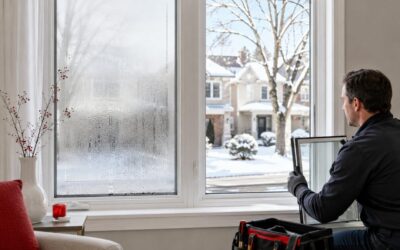
Are your heating bills skyrocketing and does a glacial draft seem to be coming from your windows? The frame or weatherstripping is often blamed, but the real culprit is often invisible and hides inside the glass itself.
If your windows are constantly fogged up, the problem likely lies with their double glazing. Fortunately, there's a surprisingly simple, economical, and eco-friendly solution that doesn't require replacing the entire window.
1. What is a "thermos" and why does it degrade?
The "thermos" of a window, also called a sealed unit or glazing, is the glazed part of the window. It consists of two or three panes of glass separated by a thin layer of air or an insulating gas, such as argon.
Its main function: Improve the energy performance of the window by creating an effective thermal barrier, which keeps the heat inside in winter and the coolness in summer.
Why is it breaking? Over time, the seal that seals the unit can deteriorate due to:
-
Freezing and thawing cycles.
-
Exposure to the elements.
-
From the natural expansion of materials.
Inside the spacer between the panes of glass is a desiccant, silica, whose role is to absorb any residual moisture. When the seal loses its elasticity, humid ambient air seeps in. The silica eventually becomes saturated with water and releases this moisture, creating the persistent condensation characteristic of a faulty thermos.
2. The telltale signs: How to know if your thermos is defective?
A faulty thermos sends clear signals. If you notice one or more of the following symptoms, it's time to take action:
-
Constant condensation between the windows: This is the most obvious sign that the seal is broken and moisture has seeped into the sealed unit.
-
Feeling cold or drafty: A thermos that has lost its insulating gas no longer has its insulating properties, making areas near windows uncomfortable.
-
Rising energy bills: Windows can be responsible for more than 25 % of heat losses In a home, a faulty thermos has a direct impact on your heating and cooling costs.
-
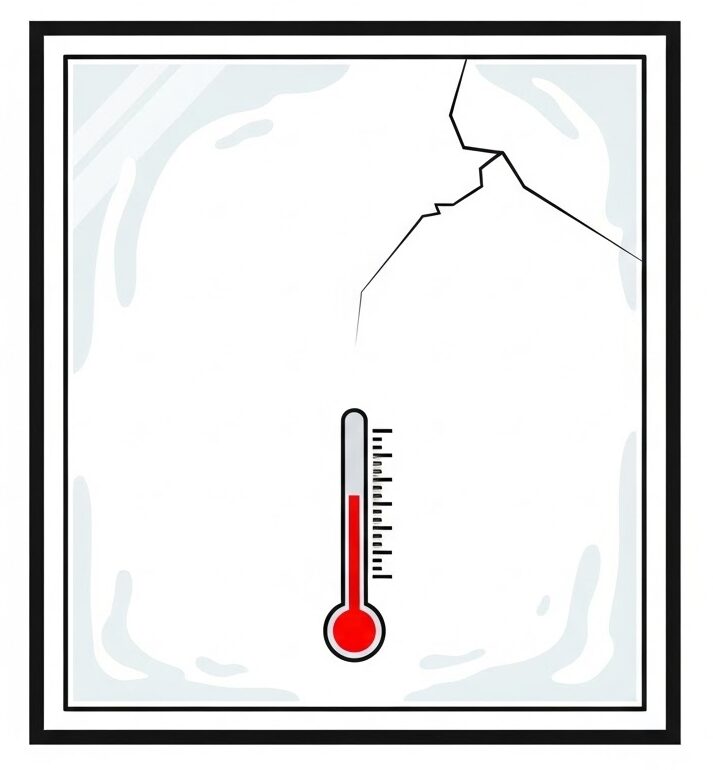
Cracked or broken window: Thermal breakage (a crack caused by a temperature shock) or physical damage irreparably compromises the integrity of the sealed unit.
-
Colored stains on the window: The appearance of pink or white spots, especially on windows heavily exposed to sunlight, can indicate permanent degradation of the solar film (Low-E) inside older double-glazed windows. Only replacement can correct this problem.
3. Replace the thermos or the entire window? A comparison of solutions.
Faced with a faulty thermos, owners have three main options:
Option A: Defogging (Aesthetic but temporary)
This technique involves drilling small holes in the glass to inject a cleaning product and allow moisture to escape.
-
Verdict: While this solution may seem economical, it is purely aesthetic. It does not restore the window's energy efficiency in any way, and its effect is only temporary.
Option B: Replacing the thermos (Smart and economical)
This option involves replacing only the defective sealed glass unit, while retaining the existing window frame.
-
Verdict: If your window structure is still in good condition, this is by far the most cost-effective solution to restore optimal insulation.
Did you know that? Roughly speaking, replacing the thermos only represents 35% to 40% of the total cost of a complete window.
Option C: Complete window replacement (For major cases)
This solution involves replacing the entire window, including the frame.
-
When should I choose this option? Only when the frame itself is damaged, rotten, deformed, or if the original installation was faulty.
-
Benefits : It guarantees maximum energy performance and allows you to modernize your facilities with the latest technologies (triple glazing, Low-E).
In summary: If the frame is sound, replacing the insulated glass unit is the most sensible choice. If the frame is rotten or the mechanisms are broken, investing in a new insulated glass unit won't solve the underlying problem.
4. The four main advantages of replacing only the thermos
If your window frame is sound, here's why you should opt for replacing just the glazing:
-
Achieve substantial savings: Replacing only the thermos is up to four times cheaper than a complete replacement.
-
Regaining optimal energy efficiency: A new thermos immediately restores insulating performance, eliminating cold drafts.
-
Take an eco-friendly action: By keeping the existing frame, you extend the lifespan of your windows and avoid generating unnecessary construction waste.
-
Benefit from a simple and quick intervention: Unlike a complete replacement which affects both interior and exterior cladding, changing a thermos is a targeted intervention that does not disrupt the structure of the house.
Conclusion: A wise choice for your wallet and the planet
If your window frame is in good condition, replacing the double-glazed unit is the smartest solution to resolve issues of condensation, discomfort, and heat loss. It's an economical approach that restores energy efficiency, improves your comfort, and aligns with an eco-friendly approach.
So, before investing in a complete replacement of your windows, why not first have the condition of your double-glazed units assessed?